
Crabbing is one of the easiest seaside activities to enjoy with kids. You do not need loads of gear, it does not cost much, and there is always that brilliant moment when someone shouts, “I’ve got one!” It usually takes a couple of hours to reach your spot as high tide approaches.
Safety Tips
But because most crabbing spots are around harbours, quaysides, rocks and tidal water, it is worth keeping a few simple safety tips in mind before you get started.
Check the Tide Before You Go
The tide can make a big difference to both crabbing and safety. A rising tide is usually best for catching crabs, but you also need to know when the water is coming in so you do not get caught out on rocks, slipways or lower harbour edges.
For most family crabbing trips, aim for around one to two hours before high tide. That gives you a good chance of deeper water without rushing. It’s key for catching crabs to be at the high tide, but you don’t want to wait in the wrong place and end up knee deep in water (or worse!)
My tip: I always use TideTimes.org, easy data to read and always up to date.
Keep Children Away from the Edge
Harbour walls and quaysides can be exciting places for kids, but they can also be slippery and have deep water below. Keep younger children within arm’s reach and remind them not to lean over when checking their lines. With younger children, anywhere with fencing or a pier is generally a good place to start; just make sure they don’t lean over the edge too far. My favourite place to go is the estuary in Blakeney, Norfolk. This is an open side, but it is a shallower estuary, and when the tide is in, there are often older children playing in the water or on paddle boards. It’s absolutely packed with families on busy days in the summer, and I’ve always felt safe there.
My tip: Kneeling is better than standing when looking over the edge!
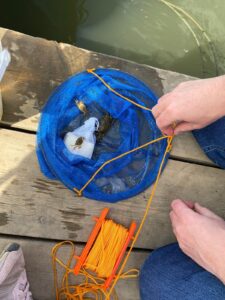
As shown below, you can pull the net in and then look at the crabs – keep it lifted slightly, and they won’t get out.
Wear Sensible Shoes
Flip flops and wet harbour stones are not a great mix. Trainers, water shoes or anything with decent grip will make the day much easier, especially if you are moving between rocks, steps or seaweed-covered areas. This is the same for on harbours as the sides usually get wet from the water dripping off the nets when you keep bringing them in.
Handle Crabs Gently
Crabbing should be fun, but it should also be kind. Use a bucket with fresh seawater, avoid overcrowding it, and return crabs carefully after a short time. Never throw them back from a height. If you’re keeping count, empty the bucket every 10 crabs and go again. They do not need to be scrambling over each other in the bucket. If you can, keep the bucket in the shade to stop the water from getting too hot.
Here’s a marine biologist showing how to hold a crab safely for both you and the crab – you will learn quickly if you get pinched..
Pack the Boring Stuff
The boring stuff usually saves the day. Take suncream, wipes, water, snacks, a small towel and a spare bag for wet gear. Crabbing always seems simple until someone drops bacon juice down their sleeve.
My tip: Take some hand sanitiser, seaweed, raw bacon etc isn’t great on your hands, especially if you want a snack!
Final Dad Tip
Do not turn it into a competition. The best crabbing days are usually the messy, relaxed ones where the kids catch three tiny crabs, name them all, and talk about them for the rest of the journey home.
Final tip: ALWAYS check your net before you leave, you’ll often catch small pipe fish and other invertebrea, make sure they go in the bucket and back in the water.